Tesla Wall Connector or Plug-In Charger? Home Install Guide

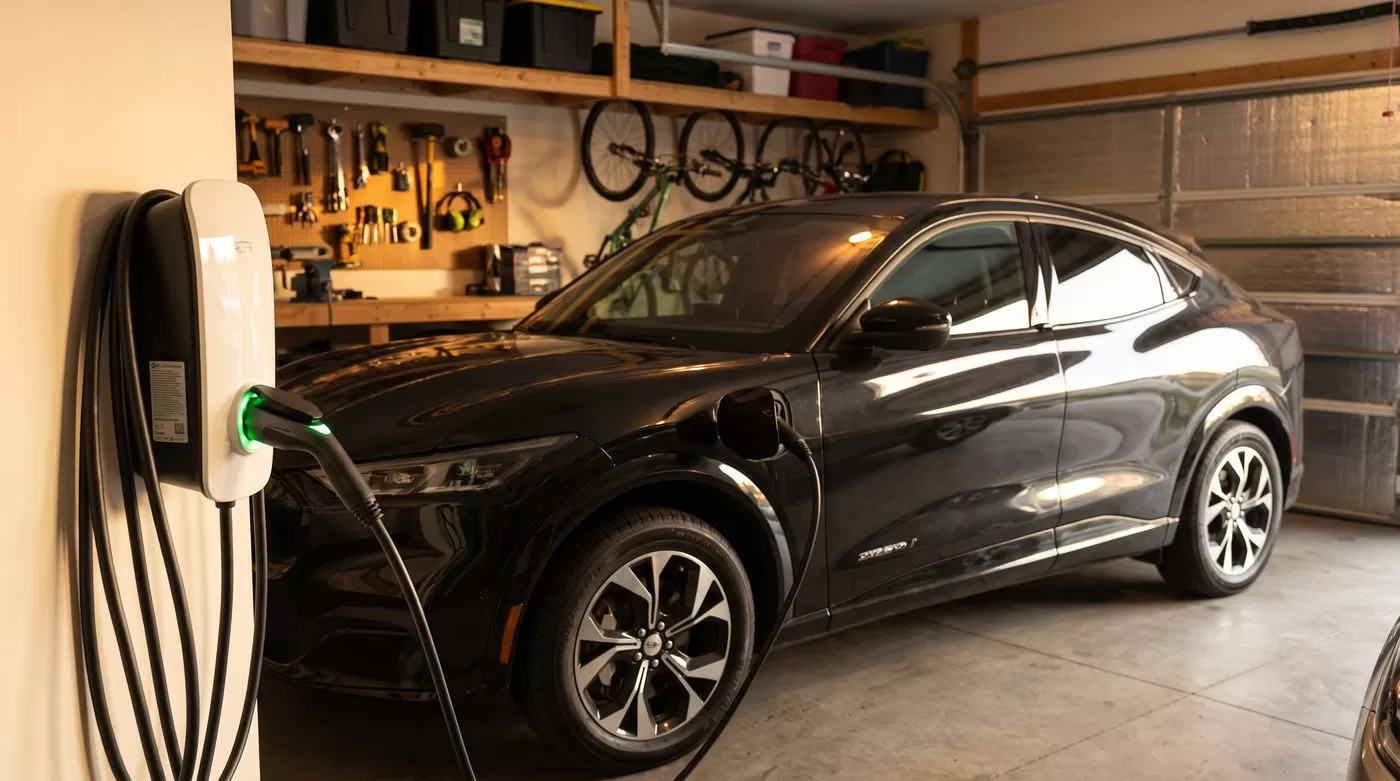
For most Tesla owners in Minnesota, a hardwired Tesla Wall Connector on a 60-amp circuit is the best home setup for an EV charger: up to 48 amps (11.5 kW), Wi-Fi scheduling, and no outlet to wear out. A Mobile Connector plugged into a NEMA 14-50 outlet is the lower-cost alternative, with a maximum of 32 amps. Both need a dedicated 240-volt circuit installed by a licensed electrician.
Reviewed by John Ihle, MN Master Electrician AM005101 · Three Rivers Electric
Tesla Wall Connector vs. Mobile Connector with a 14-50 outlet
These are the two paths most Tesla owners consider, plus a third-party Level 2 charger. The specs below come from Tesla’s support pages (Tesla — Wall Connector, Tesla — Mobile Connector).
| Setup | Max output | Breaker | Miles of range per hour (Model 3 / Y) | Notes |
|---|---|---|---|---|
| Wall Connector, hardwired | 48 A (11.5 kW) | 60 A | Depends on car’s onboard charger limit | Wi-Fi, app scheduling; lower output settings for smaller breakers |
| Mobile Connector on NEMA 14-50 | 32 A | 50 A | About 30 / 27 | 20 ft cable, portable; outlet must be rated for continuous use |
| Mobile Connector on NEMA 5-15 | 12 A | 15 A | About 6 / 5 | Standard household outlet; slow |
| Third-party Level 2 charger | Varies, often 32 to 48 A | 40 to 60 A | Same as above at equal amps | Check connector type and adapter |
The actual speed depends on your car. Many Teslas accept less than 48 amps from the wall, so a Wall Connector at full output only helps if your vehicle can use it. Check your vehicle’s specifications before you size a circuit around the charger’s maximum.
How to size the circuit
EV charging counts as a continuous load, so the breaker is sized at 125 percent of the charger’s output. Tesla’s Wall Connector page pairs the 48-amp setting with a 60-amp breaker, and lists the lower settings: a 50-amp breaker for 40 amps, 40-amp for 32 amps, 30-amp for 24 amps, 20-amp for 16 amps, and a 15-amp breaker for 12 amps. A 14-50 outlet is on a 50-amp breaker and supports the Mobile Connector’s 32-amp maximum.
Before any of that, an electrician checks your panel’s capacity with a load calculation. If your panel is full or maxed out, you may need a panel upgrade or a load management device. Our panel upgrade for EV charger guide explains when that comes up.
What an install involves
- Site visit and load calculation. The electrician checks the panel, the available breaker space, and the route to the charging spot.
- Permit. Minnesota requires an electrical permit for a new 240-volt circuit. A licensed contractor pulls it.
- Run the circuit. Wire is sized to the breaker and the distance. Longer runs may need heavier wire to limit voltage drop.
- Mount and connect. The Wall Connector is wall-mounted and hardwired. For the plug-in route, a 14-50 outlet is installed in a proper box.
- Test, inspect and set up. The inspector checks the work. Then the charger connects to your Wi-Fi and the Tesla app.
Our guide to Level 2 EV charger installation in Minnesota covers the process in more detail. Typical installation costs depend on the distance to the panel, the wall type, whether the panel needs work, and local permit fees. Request a firm number through our EV charger installation quote page.
Hardwired or plug-in?
The Wall Connector is hardwired, so there is no plug to loosen, no outlet to warm up and no cable to walk off with. The Mobile Connector with a 14-50 outlet is cheaper and portable. You can take it on a road trip and use it at campgrounds. However, a 14-50 receptacle under a continuous load needs to be a good-quality unit properly installed, because poor connections overheat. If your outlet is in a cold garage, replace it if it looks worn or discolored.
Third-party chargers and the connector question
Teslas use the NACS connector, and many other EVs use J1772. If you own both types of vehicle, or expect to change cars, a charger with the right connector or adapters matters. A third-party charger with a J1772 cable can charge a Tesla with an adapter, and a NACS charger can serve many non-Tesla vehicles with an adapter. Check the adapter’s amp rating. A charger that you can use for any future vehicle may justify a slightly higher price.
Cold-garage charging and preconditioning in Minnesota
Cold weather slows charging and reduces range, because the battery has to warm up and the cabin needs heat. Two habits help:
- Stay plugged in. A car that is plugged in can use grid power for battery and cabin heating instead of draining the battery. Keep the car connected overnight when temperatures are below freezing.
- Precondition before you leave. Set a departure time in the vehicle or app so the car warms the battery and cabin while connected. You start the day with a warm battery and a full charge.
An attached heated garage is better than a detached cold garage, but either works. If the charger is outdoors, choose outdoor-rated equipment, since the Department of Energy notes that outdoor charging is fine in rain with outdoor-rated equipment. Keep the cable hung up off the floor. The charger’s published operating temperature range, which Tesla’s support pages did not list, should be checked in the installation manual before you mount it outside.
Which should you pick?
- Daily Tesla driver with a garage: Wall Connector on a 60-amp circuit, or a 50-amp circuit if your car cannot use more than 40 amps.
- Light use or budget: Mobile Connector on a properly installed 14-50 outlet.
- Two EVs or mixed fleet: Talk with an electrician about load sharing so both cars charge without a service upgrade.
Need a licensed electrician in the Twin Cities? Call Three Rivers Electric at 651-418-1476 or request a quote. We pull the permits and handle inspections so the work is done to code.
Frequently asked questions
Is the Tesla Wall Connector worth it over a 14-50 outlet?
If you drive daily and your car accepts more than 32 amps, yes. The Wall Connector offers up to 48 amps on a 60-amp breaker, Wi-Fi scheduling, and a hardwired connection. A 14-50 outlet with the Mobile Connector tops out at 32 amps but is cheaper and portable.
What size breaker does a Tesla Wall Connector need?
Tesla’s support page lists a 60-amp breaker for the maximum 48-amp output. Lower settings use smaller breakers: 50 amp for 40 amp output, 40 amp for 32 amp, 30 amp for 24 amp, and so on. Your electrician sizes the circuit after checking your panel.
How fast does a Tesla charge on a 14-50 outlet?
Tesla’s Mobile Connector page lists about 30 miles of range per hour for a Model 3 and 27 for a Model Y on a 14-50 outlet, with a 32-amp maximum. On a standard 5-15 outlet it is only about 5 to 6 miles per hour.
Can I charge a Tesla in a cold Minnesota garage?
Yes. Cold slows charging and reduces range, so stay plugged in and precondition the car before departure. For outdoor mounting use outdoor-rated equipment and check the charger’s published operating temperature range. A licensed electrician should install the circuit.
Do I need a permit to install a Tesla charger in Minnesota?
In general, yes. A new 240-volt circuit is electrical work that requires a permit and inspection, and a licensed electrician should do it. The contractor typically pulls the permit. Requirements and fees vary by city.
Sources
- Tesla Support — Wall Connector
- Tesla Support — Mobile Connector
- U.S. DOE Alternative Fuels Data Center — Charging at home
Three Rivers Electric is a veteran-owned, family-run Twin Cities electrical contractor (MN license EA761814). We pull the permit, do the work to code and stand behind it.
Get a free quoteCall 651-418-1476