Smart Panels & Load Management: Add Big Loads Without a Full Upgrade

If you’re a Twin Cities homeowner adding an EV charger, a heat pump, or a hot tub, you’ve probably been told you need a full 200-amp service upgrade. Sometimes that’s true. But there’s a newer, often cheaper path a lot of people don’t know about: smart panels and load-management devices can let you add a big electrical load without ripping out your existing service. Here’s how they work and when they actually make sense.
What is a smart panel?
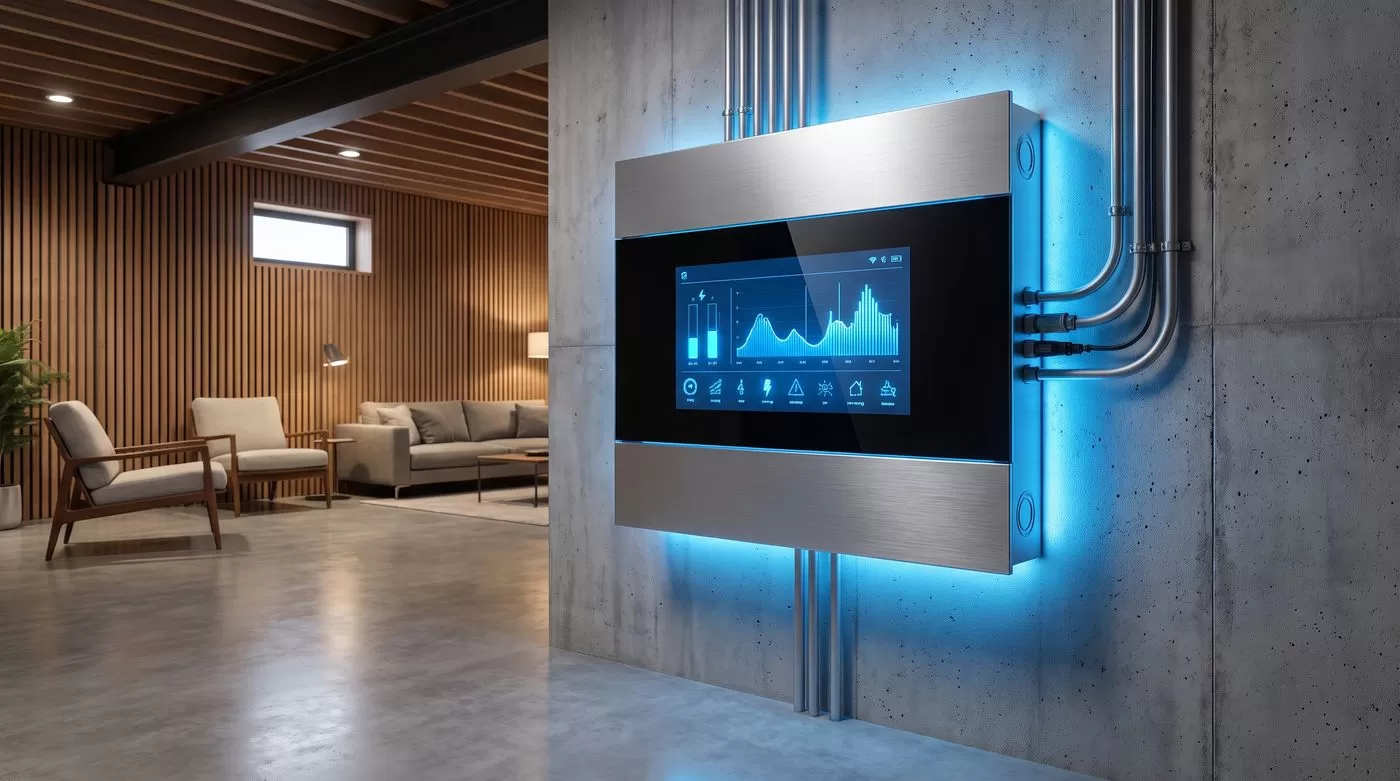
A smart panel is an electrical panel with a brain. Instead of just distributing power, it monitors every circuit, lets you see and control loads from an app, and can automatically balance demand so your home never trips its main. Brands like Span and Lumin are the best-known. They also make it much simpler to add a home battery and to choose which circuits stay powered during an outage.
How load management lets you skip a panel upgrade
Here’s the key idea: most homes rarely use everything at once. A load-management device takes advantage of that. It’s a smaller, cheaper piece of equipment that sits alongside your existing panel and watches total demand in real time — when the house gets close to its limit, it briefly pauses a non-critical load (almost always the EV charger) until demand drops. Your car still charges; it just yields for a few minutes when the oven, dryer, and AC all fire at once.
Because the device keeps you within your service capacity, many homes on 100- or 150-amp service can add a Level 2 EV charger without a full upgrade. It’s code-recognized, and it’s usually a fraction of the cost of new service.
Smart panel vs. a traditional 200-amp upgrade
These solve different problems, so the right answer depends on what you’re after:
- Load-management device — cheapest option. Best when you just need to add one big load (usually an EV) and your panel has physical space but not amperage headroom.
- Smart panel — mid-to-premium. Best when you want whole-home energy monitoring, per-circuit control, outage load prioritization, and easy battery/solar integration.
- Traditional 200-amp service upgrade — the permanent capacity fix. Best when your service is genuinely maxed out, your panel is old or unsafe, or you’re adding several large loads at once.
Is a smart panel worth it in Minnesota?
For the right home, yes. If you’re adding an EV charger or heat pump and your only obstacle is capacity, a smart panel or load-management device can save you thousands versus a full service upgrade — and Minnesota energy advocates have pointed to exactly this as a way to electrify homes affordably. They also shine if you’re heading toward solar and battery storage, where deciding what stays on during an outage matters.
But they’re not a cure-all. If you still have a Federal Pacific or Zinsco panel, a fuse box, or a service that’s truly overloaded, the honest answer is still a proper panel or service upgrade — no amount of smart software fixes unsafe hardware.
How to decide
It comes down to a load calculation — measuring what your home actually draws against what your service can safely deliver. That’s a 20-minute exercise for a licensed electrician, and it turns “do I need a $9,000 upgrade or a $1,300 device?” into a clear answer. Three Rivers Electric runs the numbers before you spend anything, then lays out your options honestly — device, smart panel, or upgrade — with a firm written price.
Smart panel FAQ
Can I add an EV charger without upgrading my panel?
Often, yes. Many Twin Cities homes can add a Level 2 charger using a load-management device that pauses the charger during peak household demand, so you stay within your existing service. It’s usually far cheaper than a full panel upgrade. A load calculation tells us whether your home qualifies.
What’s the difference between a smart panel and a load-management device?
A smart panel (like Span or Lumin) replaces your whole panel and adds circuit-by-circuit monitoring, app control, and easy battery/backup integration. A load-management device is smaller and cheaper — it sits alongside your panel and simply sheds or pauses one big load (usually an EV charger) when the home nears its limit.
Do smart panels work with solar and batteries?
Yes — that’s one of their strengths. A smart panel makes it much easier to prioritize which circuits stay on during an outage and to integrate a home battery, which is why they pair naturally with solar-plus-storage systems.
Are smart panels worth the extra cost in Minnesota?
It depends on the goal. If you just need to add one big load like an EV charger, a load-management device is usually the better value. If you want whole-home energy monitoring, outage load control, and battery-readiness, a smart panel can be worth it. If your service is truly maxed or unsafe, a traditional upgrade is still the right fix.
Thinking about an EV charger, heat pump, or hot tub and not sure if you need an upgrade? Get a load assessment or call 651-418-1476.