Storm Season Standby Generator Prep: What Twin Cities Homeowners Should Check Now
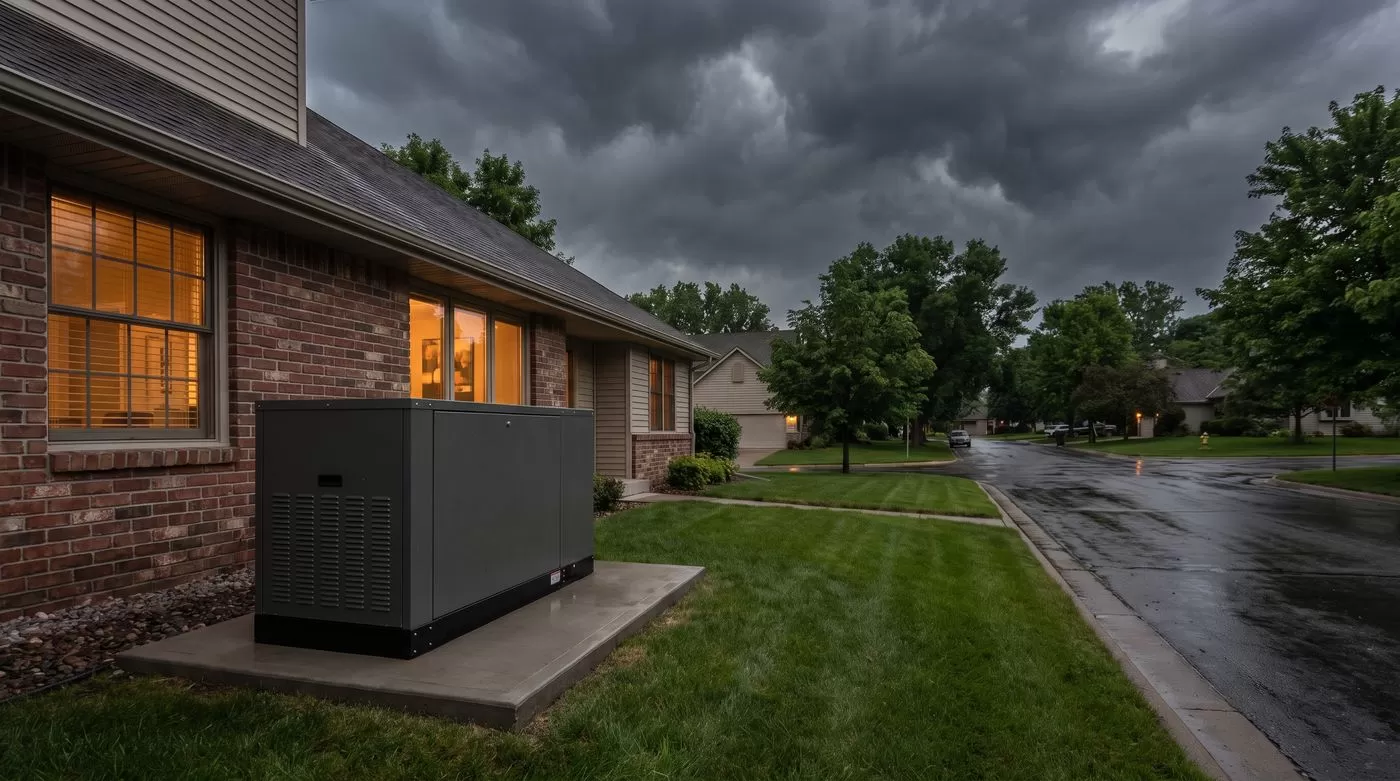
Severe weather season is open in Minnesota. The Twin Cities standby generator market is going to be 8-12 weeks out by mid-July — once the first big storm hits, every generator that didn’t fire becomes an emergency service call, and the pros get booked solid. Now is the time to test, service, and prep your generator. Here’s what every homeowner with a standby unit should be doing in May and June to make sure it works when it matters.
Five-Second Test: Does the Generator Actually Start?
Walk outside, find your generator, and run the manual start sequence (most units have a test button on the controller or a procedure in the owner’s manual). It should fire within five seconds. Let it run for two to three minutes under no load, then shut it down. If it doesn’t fire, doesn’t stay running, or runs roughly — call us this week. That single five-second test is the single best indicator of whether your unit is going to work during a real outage.
Why now? An ice-storm Saturday-night service call costs roughly three times what an annual service appointment costs on a Tuesday afternoon. The math is straightforward. Most standby generators that fail to start during a real outage failed on the previous test and were never diagnosed.
Annual Service: What We Check (on Every Brand, Not Just the Ones We Sell)
A proper annual service on a residential standby generator takes about 90 minutes per unit and covers oil change, oil filter, air filter, spark plug check, battery test, fuel system inspection, transfer switch test under simulated grid-loss conditions, and a load test. We service Generac, Kohler, Briggs, Cummins, Champion, and the major brands across Dakota, Washington, and Ramsey counties — not just brands we sell.
The transfer switch test is the part most homeowners skip. The generator can fire perfectly, but if the automatic transfer switch doesn’t sense the grid drop fast enough or trips on its own load, you still don’t have power. We simulate the outage, watch the transfer happen (should be 6-15 seconds depending on the unit), and verify all your critical circuits come back on the generator side. Annual service catches transfer-switch issues before they become 11 PM emergencies.
Fuel Supply, Cold-Weather Considerations, and Property Manager Plans
Two fuel-supply traps catch homeowners off guard. First: natural gas regulators on the gas line feeding the generator can fail or freeze (especially on outdoor regulators after a deep cold snap). The generator can be perfect but starve for fuel. We check the regulator and clean any vent screens during annual service. Second: propane-fueled standby generators in the south Twin Cities need a winterized fuel system. Cold propane doesn’t vaporize as well — we verify your tank size is right for your generator’s draw and that the propane regulator is rated for Minnesota winters.
Property managers with portfolios across the south metro: we run annual maintenance plans with documented service records, photos of the unit’s condition, and a single point of contact for all your generator-equipped properties. The plan pays for itself the first time a unit fires correctly during a tenant outage that otherwise would have been a 2 AM service call.
Frequently Asked Questions
How often should a standby generator be serviced?
Annually, minimum. Twice a year is better for units that run longer than 100 hours/year or are in dustier locations. The manufacturer warranty typically requires documented annual service to remain valid.
My generator hasn’t been serviced in 18 months. Is it still safe to run?
It will probably run, but oil and filter condition matter for long-term reliability and manufacturer warranty validity. Get it on the schedule before you actually need it. We can usually do a backlog service within 7-10 days outside of peak storm season.
Do you install new standby generators?
Yes — full install including the pad, gas line tie-in, transfer switch, and inspection. We can size the unit for your home’s actual load using a load calculation, not just a sales sheet.
What size standby generator do I need for a Twin Cities home?
Depends on what you want to power. A whole-home generator that runs everything including AC and EV charging is typically 18-26 kW. A ‘essentials only’ setup (lights, fridge, sump pump, furnace, internet, a few outlets) runs 8-14 kW. We do load calculations to find the right size before quoting.
Will my generator power my EV charger during an outage?
Only with proper sizing. Level 2 EV chargers pull 30-50 amps continuous. Most essentials generators won’t run an EV charger and the whole house simultaneously. Whole-home generators sized 20+ kW typically can — we configure smart load management so the generator doesn’t trip if too many loads come on at once.
Do you do generator repairs, not just maintenance?
Yes — diagnostic, repair, and parts replacement on most brands. If a part is unavailable from the manufacturer or repair would cost more than 60% of replacement, we say that up front.
Schedule a Pre-Storm Generator Service
Don’t wait for the first ice storm. Get your standby generator serviced now, while we have availability — by mid-July the lead time will be 8-12 weeks and that’s exactly when you don’t want it.
Call 651-418-1476 or book a service online. We service every major brand, not just the ones we sell. Property manager maintenance plans available.