Whole-House Surge Protectors: Should Every Twin Cities Home Have One?

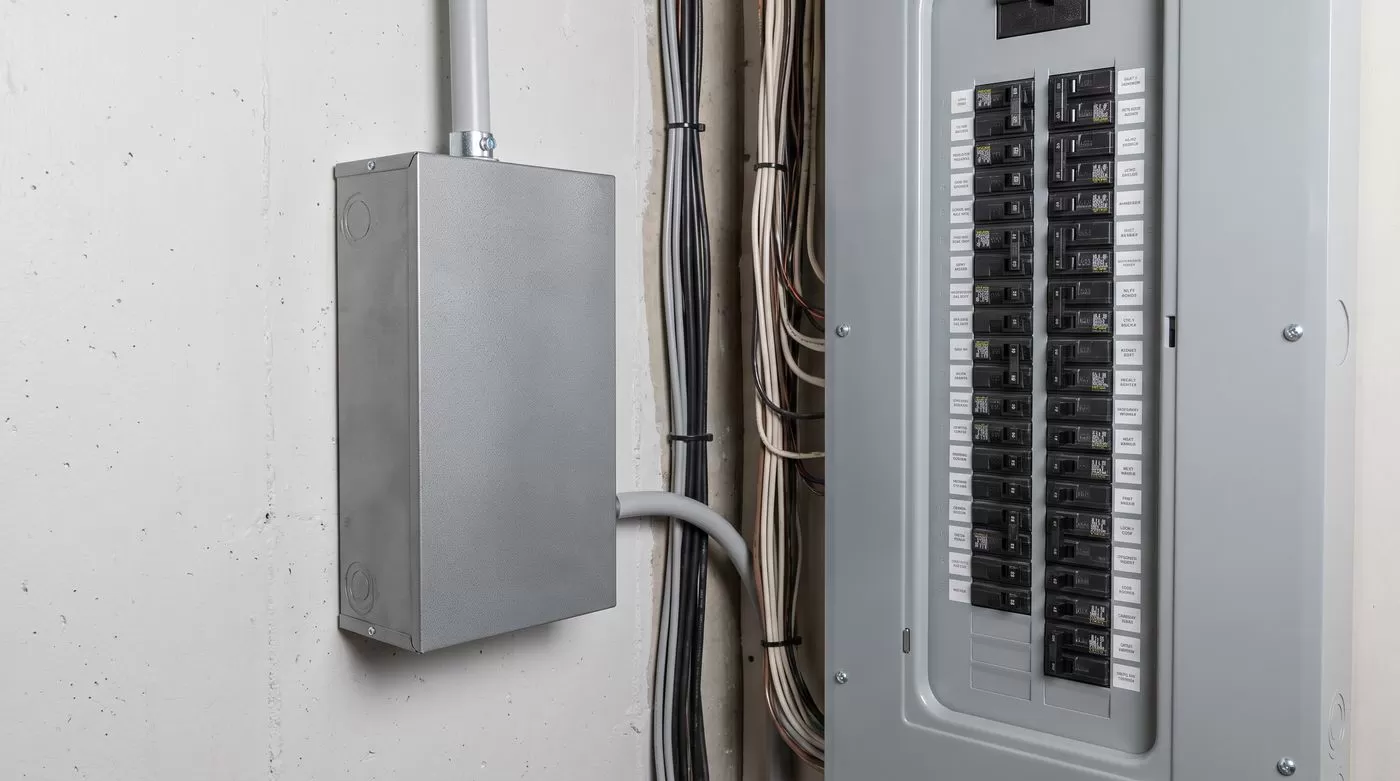
A power strip with a surge protector behind your TV stops one kind of surge — the small ones that come through the wall outlet. It does nothing for the big ones that come down the service line from a lightning strike or transformer fault. Those bigger surges are exactly what fry refrigerator boards, garage door openers, smart thermostats, and AFCI breakers all at once. A whole-house surge protector mounted at the service panel is what catches them. In storm-prone Minnesota, it’s one of the cheapest upgrades you can make with a real ROI.
What a Whole-House Surge Protector Actually Does
A whole-house (Type 2) surge protective device mounts inside or adjacent to your service panel and clamps incoming voltage spikes before they reach your branch circuits. The threshold is usually around 600V — anything above that gets shunted to ground. A direct lightning strike will still cause damage, but everything short of that — and 99% of real-world surges are short of that — gets stopped at the panel.
Common surge sources in the Twin Cities: lightning (direct or nearby strikes), transformer failure when Xcel restores power after an outage (the inrush is the surge — that’s why your microwave clock blinks for half a second), motor starts on heavy appliances (your AC compressor turning on can create a small surge on its own circuit), and downed lines that the utility re-energizes.
Cost, Installation, and the National Electrical Code Update
A quality Type 2 surge protective device costs $200-400 installed for a residential home — about 90 minutes of work including the device, breaker, and 15 minutes for a load test. The 2020 update to the National Electrical Code (NEC 230.67) makes Type 2 SPDs required on most new and replacement residential service panels. That means if you’ve upgraded your panel since roughly 2021, you likely already have one. If your panel is older, you don’t.
Some homeowners ask about Type 1 (whole-house) SPDs that mount outside the meter on the service entrance. They’re more expensive ($600-1,000) and offer slightly more protection but are typically not necessary for residential. Type 2 at the panel covers ~95% of real-world cases. We install Type 2 unless a customer specifically wants both for extra layered protection.
What’s Actually Worth Protecting (and What Isn’t)
The math for a whole-house SPD: $300 install vs. the replacement cost of what’s connected. Refrigerator control board ($400-800). Furnace/AC control boards ($300-600 each). HVAC ECM blower motor ($500-1,200). Modern oven/range control ($400-700). Smart thermostat ($150-300). Smart appliances generally. Garage door opener ($200-400). Computer/networking equipment. Add it up and the SPD pays for itself the first time a single board gets fried.
Where Type 2 alone is not enough: high-value electronics in regularly-used spots (home office, gaming setup, media room) still benefit from a quality plug-in Type 3 surge protector behind the device. The Type 2 at the panel catches the big incoming surges; the Type 3 strip catches the smaller residual surges that get through plus any motor-start surges from heavy appliances on the same circuit. Layered protection is the right approach.
Frequently Asked Questions
Are whole-house surge protectors required by code in Minnesota?
On new and replacement service panels, yes — per NEC 230.67 (adopted by Minnesota in the 2020 code cycle). Existing panels are grandfathered in, so older homes aren’t required to retrofit unless they’re upgrading the panel.
How long does a whole-house surge protector last?
8-15 years under normal conditions. Each surge event consumes some of the device’s clamping capacity. Most modern units have an LED status indicator on the front — green = protecting, red = depleted, replace. Check it once a year.
Does my homeowner’s insurance cover surge damage without an SPD?
Coverage varies. Most policies cover lightning damage but exclude surges from utility events. Some insurers offer a small discount for documented whole-house SPDs (typically 2-5%). Worth asking your agent.
Can I install a surge protector myself?
Technically you can connect one to a breaker slot, but it requires the panel cover off and proper torque on the connections. Minnesota requires a permit for any electrical panel work. We charge $300-400 for a permitted, inspected install — the math doesn’t favor DIY when an insurance claim might be denied for unpermitted work.
What brands do you install?
We rotate through Siemens, Square D, Eaton, and Leviton depending on what panel a home has and what’s in stock. All are UL-listed and offer manufacturer warranties (typically 5-10 years on the device, plus connected equipment warranties up to $25,000-75,000 from major brands).
Schedule a Surge Protector Install
Add whole-house surge protection to your service panel — typically a 90-minute install for $300-400 fully permitted. Call 651-418-1476 or book online. Brands stocked: Siemens, Square D, Eaton, Leviton. Every job permitted and inspected.