Single-Pole vs. Double-Pole Breakers (and When You Need AFCI/GFCI Breakers)

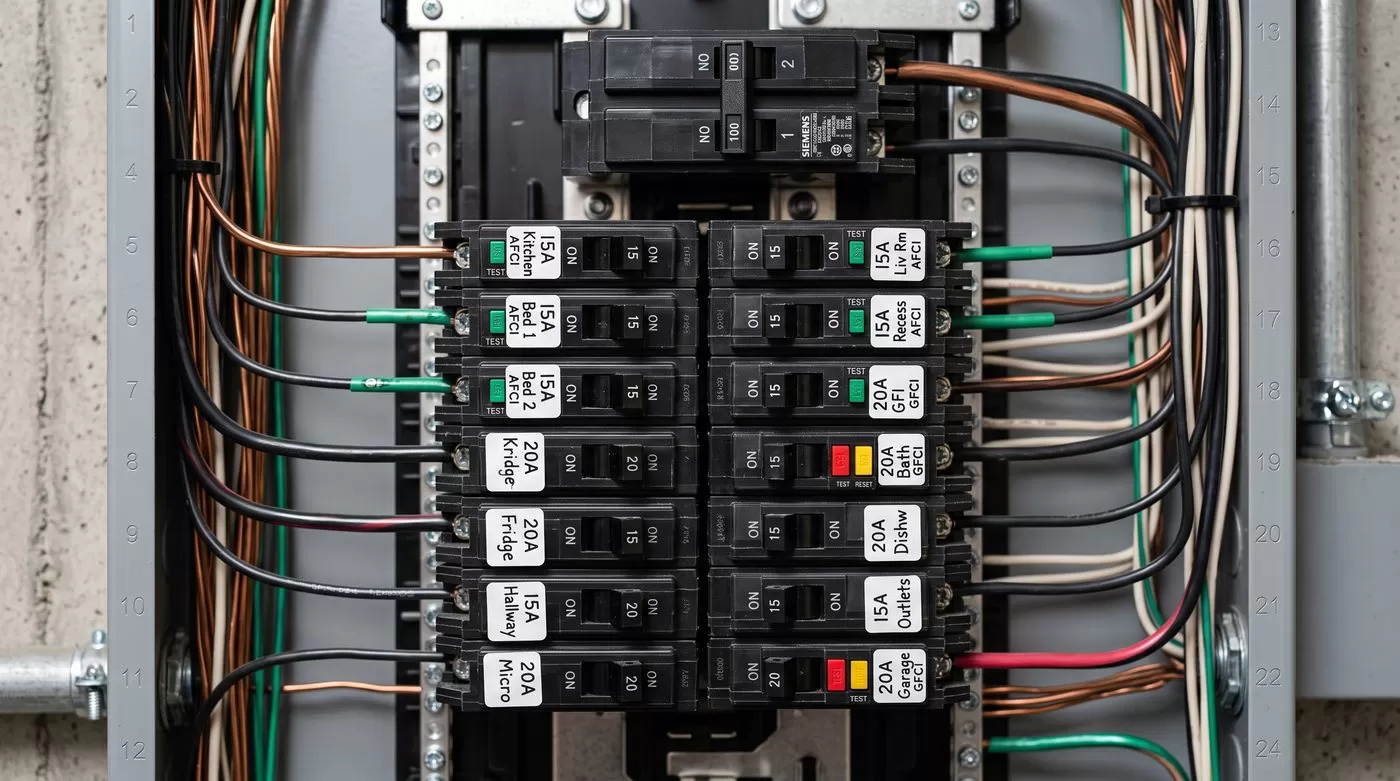
Not every breaker in your panel does the same job. The type matters for what it protects and, in several cases, what Minnesota code requires you to install.
Single-pole vs. double-pole
A single-pole breaker protects one 120-volt circuit — lights, outlets, most small appliances. A double-pole breaker ties two slots together to deliver 240 volts for bigger loads: your dryer, range, water heater, EV charger, or A/C. If you’re adding a 240-volt appliance, you need an open double-pole slot, not just one free space.
AFCI: fire protection
Arc-fault circuit interrupters detect the electrical signature of a dangerous arc — like a nicked wire behind drywall — before it starts a fire. Current Minnesota code requires AFCI protection on most living-area circuits: bedrooms, living rooms, family rooms, hallways.
GFCI: shock protection
Ground-fault circuit interrupters trip when current is leaking somewhere it shouldn’t — through you, for example. Code requires GFCI protection in kitchens, bathrooms, garages, and outdoors, either as a breaker or an outlet.
Some circuits — kitchens especially — need both AFCI and GFCI protection, which is why dual-function breakers exist. Mixing these up, or skipping them to save money, is one of the most common issues we find during inspections and home sales.
Not sure what your panel needs?
Three Rivers Electric can review your panel and bring breaker protection up to current Minnesota code. QMerit-certified, licensed (EA761814), veteran-owned, 5.0★. Get a quote or call 651-418-1476.