Portable Power Stations vs. Home Battery Backup: What’s the Real Difference?

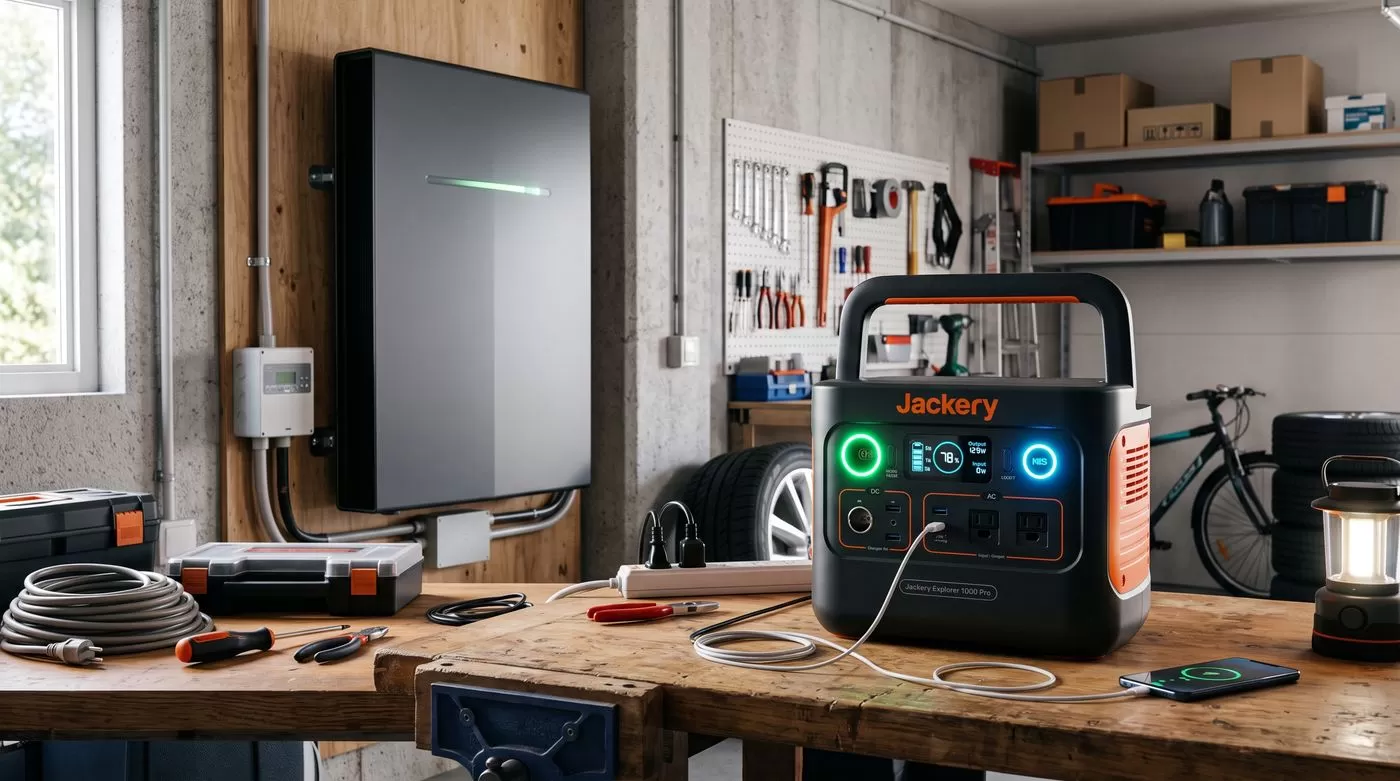
Portable power stations — the Jackery/EcoFlow/Anker category — and permanently installed home battery systems both store electricity for an outage, and marketing from both sides can make them sound like the same solution at different price points. They’re not.
Portable power stations: small loads, no installation
A portable power station is a large battery in a box you charge ahead of time and plug things into directly — a fridge, a CPAP machine, phone chargers, a laptop. It won’t connect to your home’s wiring, so it can’t run hardwired loads like a furnace blower or well pump, and capacity tops out well below what a multi-day outage demands for a whole house.
Home battery backup: whole circuits, real installation
A home battery system — paired with or without solar — wires into your panel through a transfer switch and can carry chosen circuits, or the whole home, automatically when the grid drops. It costs more and takes a real installation, but it’s the only option that keeps your furnace, sump pump, and refrigerator running together without you doing anything.
How to choose
- Short outages, specific devices: a portable power station covers most needs for a fraction of the cost.
- Multi-day outages, whole-home peace of mind: a battery system or standby generator is the more realistic answer.
Not sure which fits your home?
Three Rivers Electric evaluates backup power options across the Twin Cities Metro and can size the right system for your budget and risk tolerance. QMerit-certified, licensed (EA761814), veteran-owned, 5.0★. Get a quote or call 651-418-1476.