Hot Tub and Sauna Electrical Installation in Minnesota: The Right Way

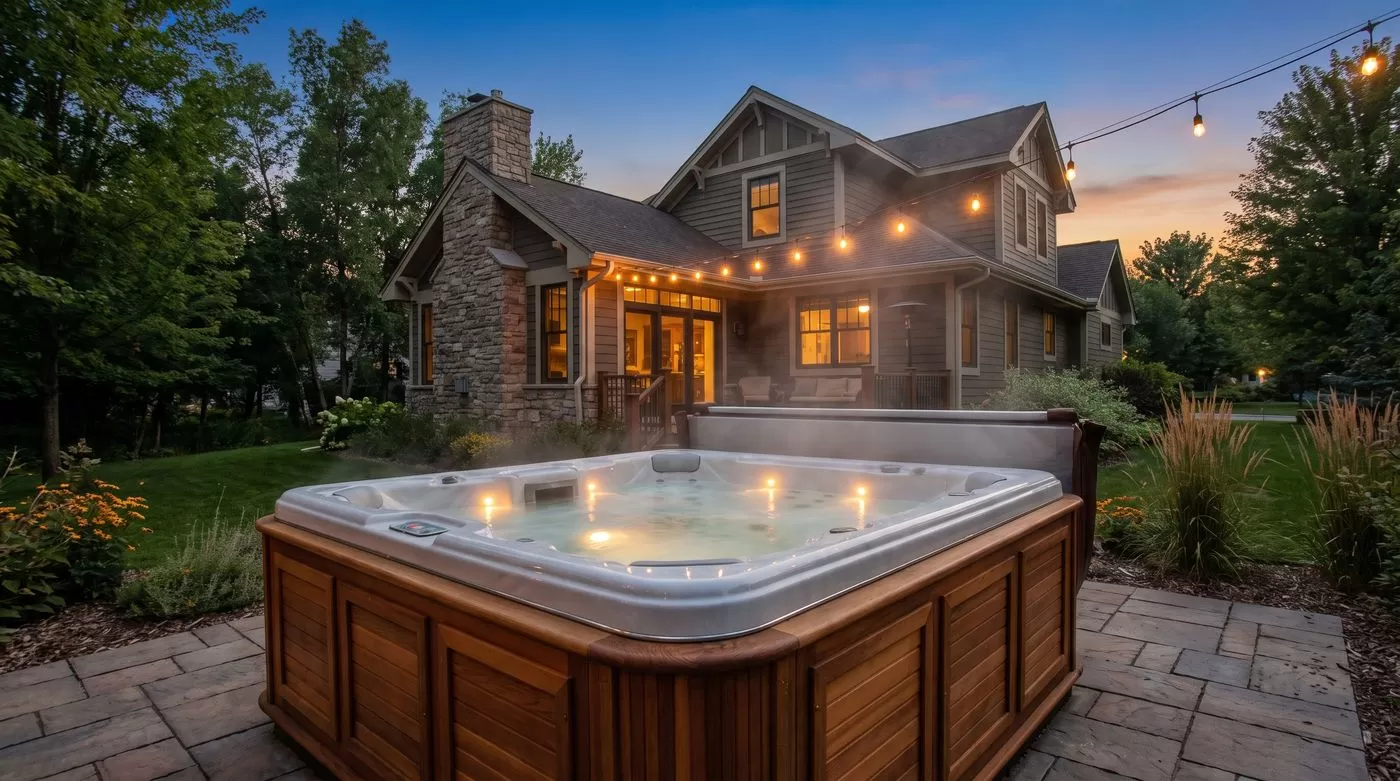
Hot tub installer to homeowner: Just plug it into the patio outlet, you’ll be fine. Three weeks later, the breaker keeps tripping, the tub installer says it’s an electrical issue, and the electrician (us) gets called in to find out the patio outlet was never rated for what a hot tub draws. Or worse: the outlet is rated for it but the safety equipment isn’t there, and the homeowner has been sitting in a hot tub with inadequate ground-fault protection. This is the single most common electrical-safety shortcut we see in residential. Here’s how hot tub and sauna electrical is actually supposed to be done in Minnesota.
What MN Code Actually Requires
A residential hot tub or spa in Minnesota requires a 240V dedicated circuit — meaning no other appliance shares that circuit. The breaker is typically 40-60 amps depending on the tub’s specs. The circuit must include a GFCI disconnect within sight of the tub (not the breaker — a separate disconnect mounted near the tub so the user can shut off power without going to the panel). The disconnect serves two purposes: emergency shutoff and service access for the installer.
Bonding is the other big requirement. Hot tubs must be bonded — meaning every metal component near the tub (the frame, the pump, any nearby rebar in concrete pads) is connected to the grounding system with a bonding conductor. This prevents stray voltage from creating a shock hazard in the water. Bonding is invisible after install but it’s the most safety-critical part of the job. A permit and inspection are required — no exceptions.
Saunas Have Their Own Quirks
Saunas use a different power profile than hot tubs. Most residential saunas are 240V at 30-50 amps, with the heating element being the major load. Like hot tubs, they need a dedicated circuit with GFCI protection. Unlike hot tubs, they’re indoors, so the disconnect doesn’t need to be weatherproofed — but it still needs to be within sight of the sauna so you can cut power if something goes wrong.
Infrared saunas (which use lower-power IR heaters instead of traditional electric stones) often run on a 120V or 240V circuit depending on size. Smaller residential IR units can plug into a standard 20-amp dedicated circuit. Traditional finn-style and steam saunas are higher draw and need the same 240V dedicated treatment as a hot tub. We do both.
What Coordinated With Your Tub Installer Means
The cleanest hot tub installs we do are the ones where the tub installer and the electrician are scheduled in sequence. Day one: we run the electrical (dedicated circuit, weatherproof disconnect, bonding) and pass inspection. Day two or shortly after: the tub installer delivers, places, and fills the tub, then plugs into the disconnect we installed. Total project: 5-10 business days from quote to first soak.
When the tub installer skips the electrical conversation and tries to plug into a patio outlet, the homeowner is the one stuck in the middle. We hear it constantly: the installer said it would work, but it keeps tripping. The fix is always the same — proper dedicated circuit, GFCI disconnect, bonding, permit. Most tub installers know this; some skip it to shorten their install timeline. If yours tries to skip the electrical scoping, that’s the moment to call us.
Frequently Asked Questions
Can I plug my hot tub into a regular outlet?
Almost never — plug-and-play 120V hot tubs exist but they’re rare and have low heating capacity. Most residential hot tubs require a 240V dedicated circuit with GFCI protection. Saying just plug it in usually means the installer is cutting corners.
Does the hot tub electrical have to be inspected?
Yes — Minnesota code requires a permit and inspection for any new 240V dedicated circuit, and hot tubs always trigger that requirement. The permit and inspection are included in our written quote.
What is the typical cost for hot tub electrical?
$800-$1,500 for a typical install — varies based on distance from the panel to the tub location, whether the run is through finished space or unfinished basement, and whether the panel has room for the new breaker. We do a walkthrough before quoting.
Do I need a separate sub-panel for a hot tub?
Almost never for a single hot tub. A sub-panel is only needed if you’re adding the tub plus other significant loads and your main panel is full. We run a load calc before deciding.
Can you install the hot tub disconnect before the tub arrives?
Yes — that’s the cleanest order. We do the dedicated circuit, GFCI disconnect, and bonding first. The tub installer just plugs into the disconnect when they show up. No back-and-forth.
Do you do sauna electrical for new construction?
Yes — we coordinate with general contractors and home addition projects routinely. The sauna circuit goes into the rough-in stage with the other electrical, before drywall closes up.
Get Hot Tub or Sauna Electrical Done Right
Three Rivers Electric handles the full hot tub and sauna electrical scope: dedicated 240V circuit, GFCI disconnect within sight of the tub, proper bonding to the water, permit, inspection. We coordinate with your tub or sauna installer so the install runs smoothly.
Call 651-418-1476 or request a quote online. Licensed in MN (#EA761814), every job permitted and inspected.