GFCI vs AFCI Outlets: What Every Twin Cities Homeowner Should Know

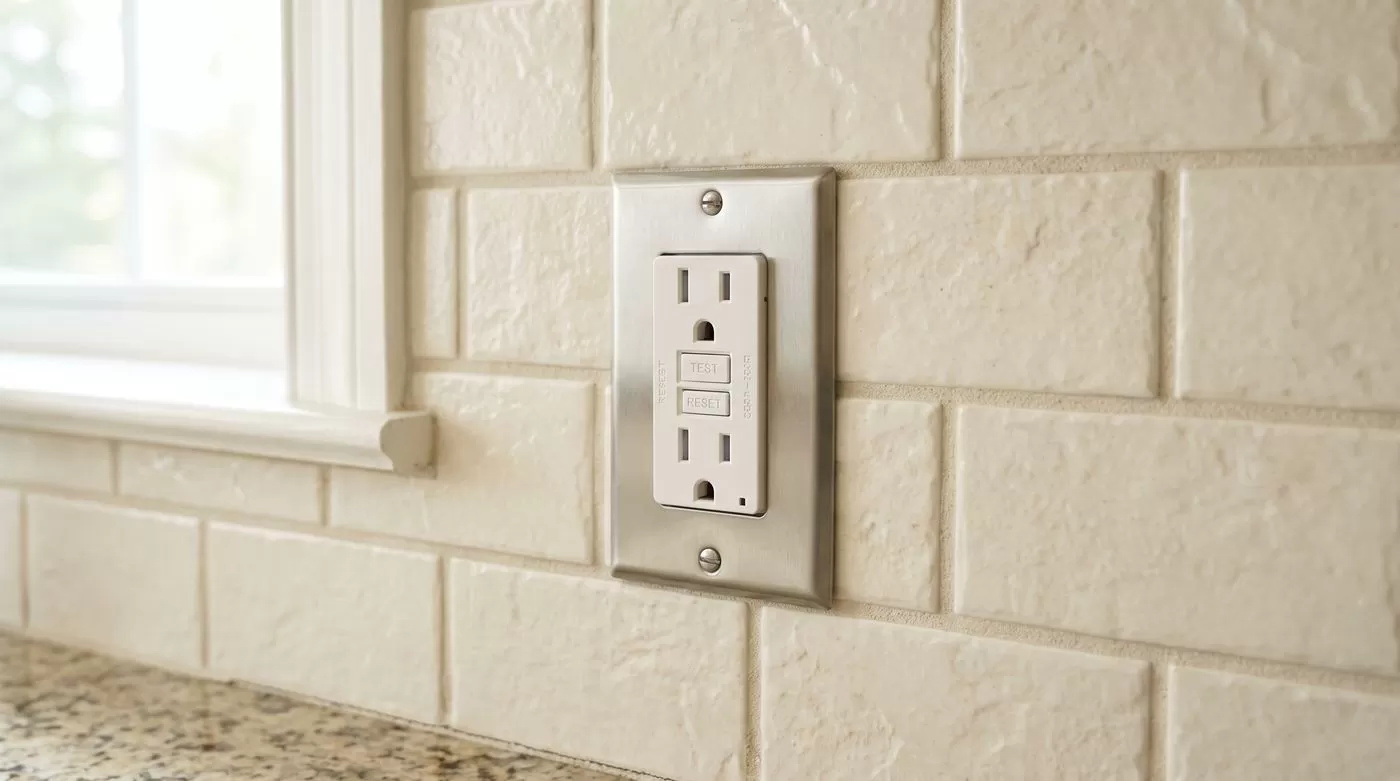
GFCI and AFCI. They look similar — modern outlets with a TEST button — but they protect against completely different hazards. Get the wrong one in the wrong room and you don’t have the protection you think you have. Get both right (which modern Minnesota code now requires across most rooms) and you’ve eliminated the two leading causes of electrical fires and electrocutions in residential homes. Here’s the plain-English difference, where each one is required, and what to do about it if you live in an older Twin Cities home.
GFCI: Protects People From Shock Hazards
GFCI stands for Ground-Fault Circuit Interrupter. It detects when current is leaking somewhere it shouldn’t — usually through a person — and cuts power within a fraction of a second. The leak is typically tiny (5 milliamps) but enough to interrupt a human heart. GFCI outlets save lives.
GFCIs are required in any location where water and electricity might meet: bathrooms, kitchens (within six feet of a sink), laundry rooms, garages, outdoor outlets, basements (especially unfinished), and crawlspaces. Every outdoor outlet on a Twin Cities home built in the last 25 years is GFCI-protected. Older homes often aren’t, and that’s the single highest-impact upgrade we recommend on safety walkthroughs. A GFCI outlet costs about $25 in materials and takes 20 minutes to install.
AFCI: Protects the House From Fire Hazards
AFCI stands for Arc-Fault Circuit Interrupter. It detects the electrical signature of arcing — the small sparks that happen inside walls when a wire is damaged, a connection is loose, or an old conductor is starting to fail. Arcing is the #1 cause of electrical fires. AFCIs cut power before the arc can ignite surrounding insulation.
Minnesota code (following the National Electrical Code) requires AFCI protection on most branch circuits in living spaces: bedrooms, living rooms, dining rooms, hallways, family rooms, and closets. New construction since the mid-2010s is fully AFCI-protected. Major remodels in older homes pull the requirement forward — when we touch a circuit during a remodel, that circuit has to come up to current code, which usually means swapping in an AFCI breaker.
What Older Twin Cities Homes Need
The south metro housing stock skews older than the metro average. South Saint Paul, West Saint Paul, Inver Grove Heights — lots of ’50s through ’70s builds. Those homes were wired before GFCI and AFCI existed, and they’re rarely fully retrofitted unless someone has remodeled extensively.
The right approach in an older home isn’t to gut the wiring — it’s to layer in the protection where current code requires it. We do these in priority order: (1) every outdoor outlet → GFCI, (2) all bathrooms and kitchens → GFCI, (3) bedrooms → AFCI breakers in the panel, (4) main living areas → AFCI as part of any panel upgrade or major remodel. A whole-home GFCI/AFCI retrofit on an older home runs $1,500-$3,500 depending on circuit count and panel compatibility. It’s the highest safety upside per dollar of any electrical investment.
Frequently Asked Questions
How do I tell if my outlets are GFCI?
GFCI outlets have a TEST and RESET button on the face. Press TEST — the power should kill immediately. Press RESET to restore. If pressing TEST does nothing, the GFCI is dead and needs replacement (~$25 part, 20-minute job).
How do I tell if I have AFCI breakers?
AFCI breakers are at the panel, not at the outlet. Open your panel cover (with the main breaker safely off if you’re not comfortable looking with it on). AFCI breakers have a TEST button on the face and are usually labeled AFCI or DUAL (dual = both AFCI and GFCI). Many older panels have no AFCIs at all.
Do I need both GFCI and AFCI in the same outlet?
Modern code increasingly requires dual-function (GFCI + AFCI) on circuits that pass through both kitchen/bath and living areas. Dual-function breakers and outlets exist and we use them where code calls for both.
Will GFCIs trip on appliances like refrigerators?
Modern GFCIs are tuned not to trip on normal appliance loads. Older GFCIs (15+ years) can trip on fridges, freezers, and motor-driven appliances. If yours is tripping under normal load, it’s time for a replacement.
Can I install a GFCI outlet myself?
Technically you can, but Minnesota code requires permits for any new electrical work. Outlet replacement in the same location is gray area but the safest path is to use a licensed electrician — small jobs are quick and we ensure the wiring upstream is intact, which is the part DIYers usually miss.
Are GFCI/AFCI upgrades required when selling a home?
Not automatically, but home inspectors flag missing GFCIs in bathrooms and kitchens routinely, and the buyer’s agent usually negotiates against them. Most sellers come out ahead by doing the upgrade before listing — typically a 1-day job that pays itself back at closing.
Bring Your Twin Cities Home Up to Code
Older home, missing GFCIs, no AFCIs in the bedrooms? We do whole-home GFCI/AFCI retrofits across Dakota, Washington, and Ramsey counties on a one-day timeline for most homes. Safety walkthroughs for property managers and homeowners.
Call 651-418-1476 or book a safety check online. Every job permitted and inspected, written line-item quote with the permit fee broken out.