Generator Fuel Types Compared: Gas, Propane, and Diesel for Minnesota Standby Power

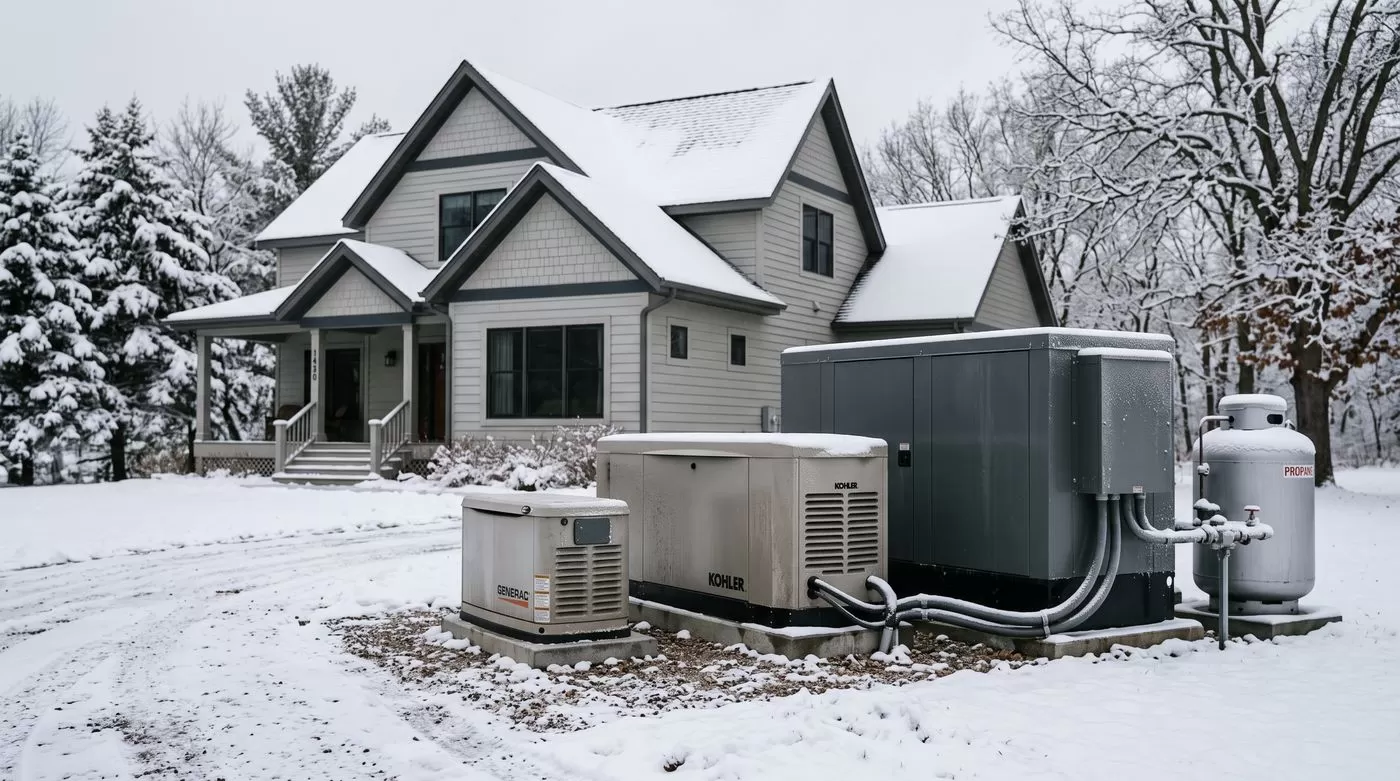
Once you’ve decided on a standby generator, the fuel type is one of the biggest decisions left — and it affects cost, reliability, and how the generator performs specifically in a Minnesota winter.
Natural gas: convenient if you have the line
If your home already has natural gas service, a natural gas generator never needs refueling — it draws straight from the utility line. The trade-off: if the outage is caused by the same storm that disrupts gas service (rare, but possible), you lose that advantage.
Propane: flexible, needs a tank
Propane generators run on a stored tank you own, which means fuel availability doesn’t depend on utility infrastructure at all. It requires tank space in the yard and periodic refills, but it’s a strong choice for homes without natural gas access.
Diesel: less common for residential
Diesel offers strong efficiency and is common in commercial standby systems, but cold-weather starting reliability and local fuel storage rules make it a less typical choice for Minnesota homes compared to gas or propane.
Cold-weather performance matters most
Whatever fuel you choose, ask specifically how the unit performs at sub-zero starts — that’s the real test for Minnesota, not the spec sheet.
Choosing a standby generator?
Three Rivers Electric sizes and installs standby generators across the Twin Cities Metro, matched to your home’s fuel access and winter performance needs. QMerit-certified, licensed (EA761814), veteran-owned, 5.0★. Get a free quote or call 651-418-1476.