
Kitchen Remodel Electrical: What Twin Cities Code Requires (and What People Skip)

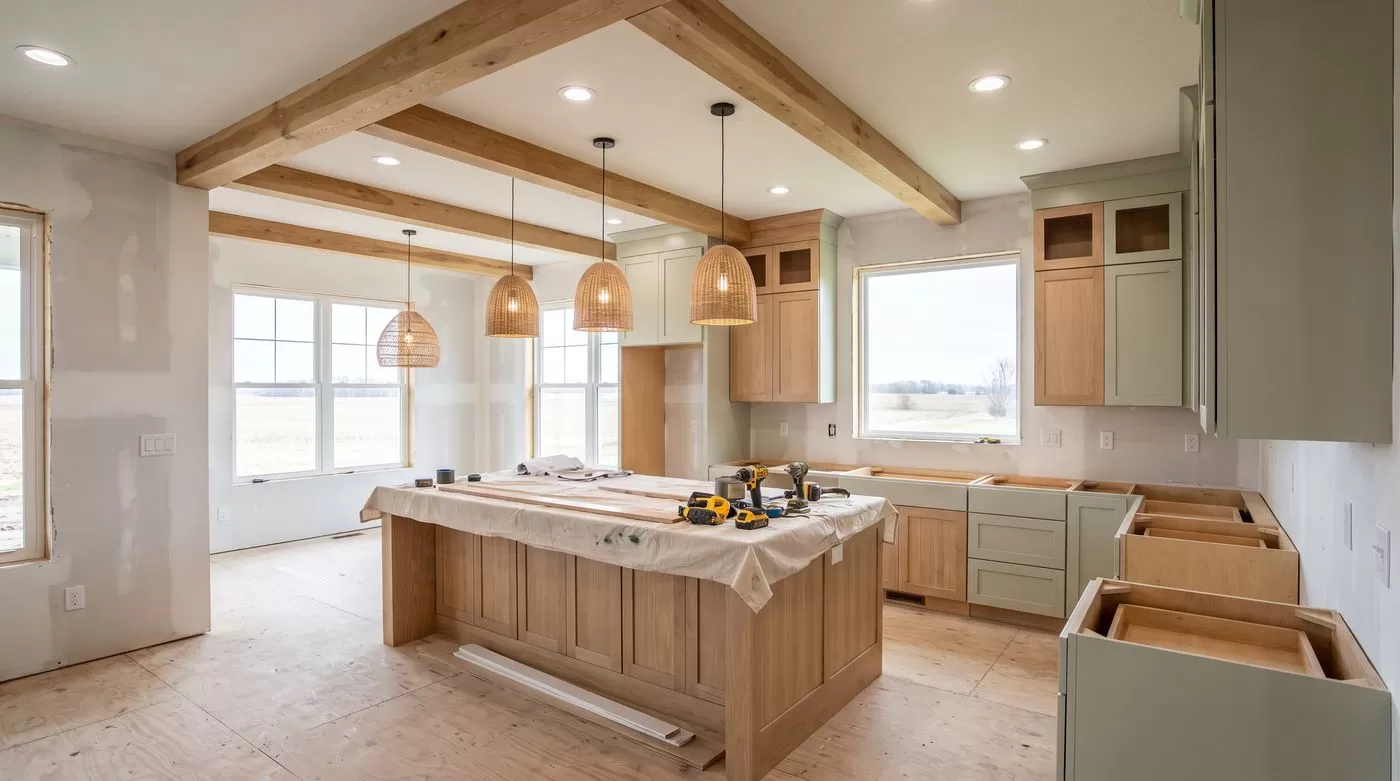
A kitchen remodel is the most code-intensive electrical job most homeowners ever pay for. Every code cycle has added requirements for kitchens specifically — dedicated appliance circuits, GFCI on countertops, AFCI on the rest, lighting upgrades, USB outlets. Most pre-2000 kitchens are not even close to current code. When you remodel, the work has to come up. Here’s the plain-English version of what that means for your project, your budget, and your inspector.
Required Circuits in a Modern Kitchen
Minimum required dedicated circuits in a kitchen: (1) two small-appliance branch circuits feeding the countertops, each 20A — so your toaster and coffee maker on the same outlet don’t trip the breaker. (2) Refrigerator on its own dedicated 15A or 20A circuit. (3) Dishwasher on its own dedicated 20A circuit. (4) Garbage disposal on its own dedicated 20A circuit. (5) Microwave (if hardwired or above-range) on its own 20A circuit. (6) Range or cooktop on a dedicated 240V/50A circuit (most electric ranges) or just supplied gas if your range is gas. (7) Lighting on a separate 15A circuit, not shared with outlets.
That’s a minimum of 6-7 dedicated circuits for a modern kitchen. Older kitchens (pre-1990) often have 2-3 circuits total, with the fridge, microwave, and counter outlets all sharing one breaker that trips constantly when you run multiple things. Bringing it up to code is one of the biggest hidden costs of a kitchen remodel — and one of the upgrades that actually changes daily life in the kitchen.
GFCI, AFCI, and the Outlet Spacing Rules
Every countertop outlet must be GFCI-protected (NEC 210.8). All other 120V outlets in the kitchen (under-cabinet lighting, refrigerator, microwave hardwired connections) must be AFCI-protected. Many circuits will be dual-function (GFCI + AFCI), which means dual-function breakers or dual-function outlets at the start of each circuit. Dual-function breakers run $50-80 each, vs. $15-25 for a basic breaker.
Outlet spacing: countertops more than 12 inches wide require an outlet within every 4 feet of countertop. Islands and peninsulas require their own outlet for any countertop surface 24×12 inches or larger. “No two-foot rule” — no point on the countertop should be more than 24 inches from an outlet. These rules are why modern kitchens have so many outlets and why pre-code kitchens always feel like there are never enough.
Upgrades Worth Including in the Remodel
While the walls are open, the marginal cost of upgrades is low. (1) Under-cabinet LED lighting — typically $400-800 added for hard-wired LED tape with a wall switch and dimmer. Hugely improves usability of the kitchen. (2) Pendant lighting over the island — $300-600 per pendant depending on the fixture. (3) USB outlets at convenient counter spots — $25-40 more per outlet over standard. (4) Smart switches for main lighting — $50-80 per switch installed.
Less common but worth considering: dedicated 240V circuit for a future induction range even if you’re keeping gas for now ($300-500 added during a remodel, $1,500+ to add later); a dedicated subpanel in the kitchen if you’re doing major load expansion (rarely worth it for single-family but common in commercial/restaurant remodels). We walk through these options at the quote stage so nothing’s a surprise mid-project.
Frequently Asked Questions
Do I need a permit for kitchen remodel electrical?
Yes — any new circuits, any device relocation, any rewiring requires a permit. Pulling permits early is often the bottleneck on remodel timelines, so we file as soon as the plan is final.
How much should I budget for electrical in a kitchen remodel?
Typical Twin Cities full-kitchen remodel electrical: $4,500-9,000 depending on existing wiring, layout complexity, lighting choices, and whether the panel needs an upgrade to handle the new loads. We do line-item quotes.
Does my panel need to be upgraded for a remodel?
Often yes — older 100A panels are usually at capacity already, and adding 6-7 new kitchen circuits forces the question. We do a load calculation before quoting. A 200A panel upgrade adds $2,800-4,200 to the project.
Can I keep the same range circuit if I switch from gas to electric?
Probably not — gas-range circuits are 120V/20A; electric ranges need 240V/40A or 50A. A new dedicated 240V run from the panel is typical. Plan for $400-800 added.
Should I install induction or stay with gas?
Personal preference but the electrical setup differs. Induction needs the 240V circuit. Gas ranges have a small 120V outlet for the igniter and clock. If you might switch later, install the 240V circuit now during the remodel — much cheaper than adding it later.
Plan Your Kitchen Remodel Electrical Right
We do 8-12 kitchen remodels per year as the electrical contractor. In-home quote with line items, fully permitted, coordinated with your GC. Call 651-418-1476 or book online.