
Aluminum Wiring in Older Twin Cities Homes: What to Do If You Have It

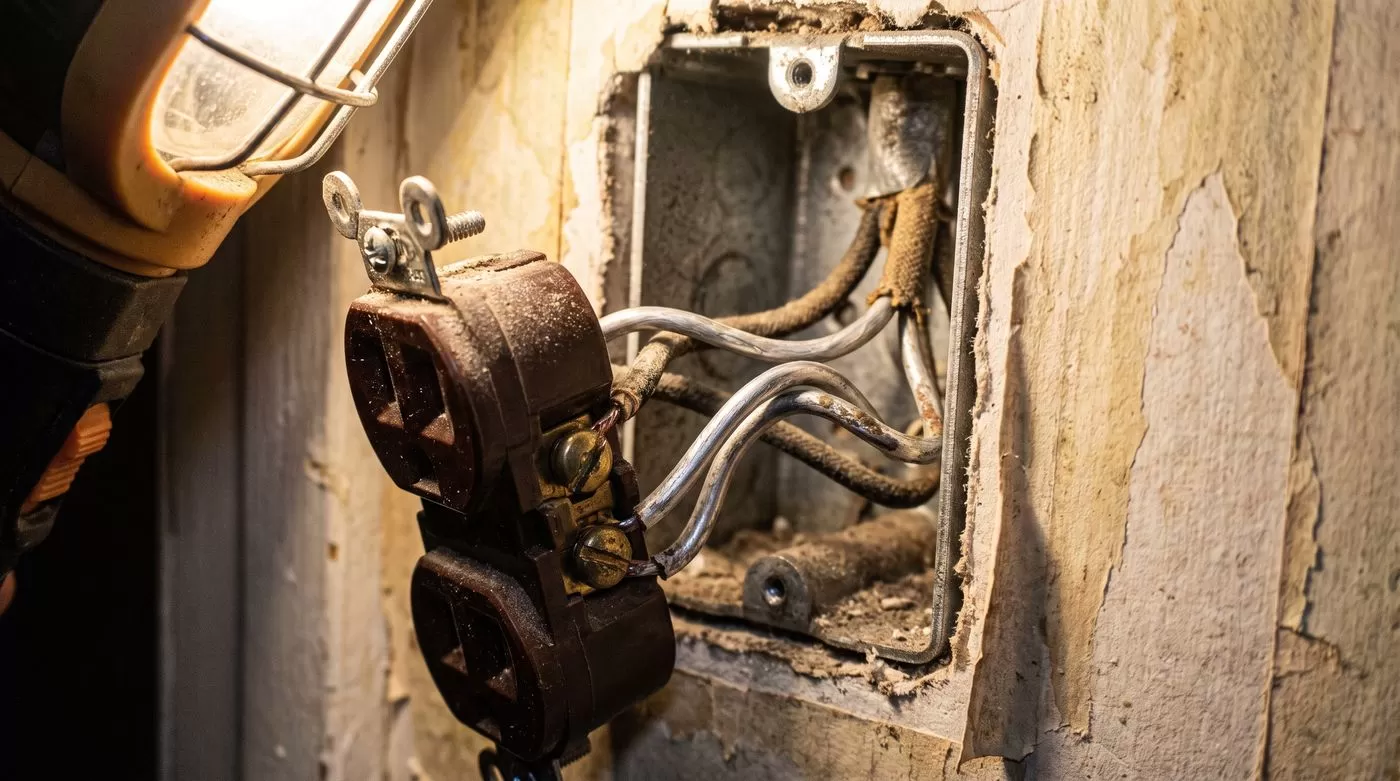
Aluminum branch-circuit wiring was installed in millions of US homes between roughly 1965 and 1973, including a lot of homes in the south Twin Cities. It looks different than copper (silver-colored conductor), expands and contracts more aggressively with temperature, and creates loose connections over time. Loose connections + electrical load = overheating, melting insulation, and house fires. The CPSC has linked aluminum wiring to a 55× higher rate of fire-hazard conditions. Here’s how to identify yours and the standard fix that the insurance companies will accept.
How to Tell If You Have Aluminum Wiring
Three places to look. First, the panel — pull off a few breaker covers and look at the conductors going into the breakers. Aluminum is silver-colored; copper is, well, copper-colored. Second, at outlets and switches — remove a cover plate, look at the conductor leaving the back of the device. Same color check. Third, in the attic or basement — anywhere conductors are exposed, the color is obvious. “Aluminum-clad” or “copper-clad aluminum” wires (a thin copper layer over aluminum) are the same hazard and require the same fix.
Houses where it shows up most: built 1965-1973 (definitely worth checking), built 1973-1980 (sometimes), pre-1965 (rare — most original wiring was copper). If you bought the home post-2000, the inspection report probably mentioned it. If not, the simplest verification is a 30-minute walkthrough by a licensed electrician. We charge nothing for a quick aluminum-wiring screening visit in our service area.
What Insurance Companies Are Doing About It
Several major insurers — State Farm, Allstate, Farmers, AAA — will cancel or refuse to renew homeowner policies on houses with untreated aluminum branch-circuit wiring. They’ll typically give you 30-90 days to remediate. The remediation accepted by most insurers is either complete re-wiring (rare and expensive) or treating every aluminum connection with COPALUM crimps or AlumiConn connectors.
If your insurance company has flagged your aluminum wiring, you have a paperwork problem on top of a safety problem — they want documented remediation by a licensed electrician with photos, often with a follow-up letter we provide certifying the work to the AlumiConn or COPALUM standard. We do this routinely and the package we deliver satisfies every insurer we’ve worked with.
The COPALUM and AlumiConn Fix
COPALUM is a special crimp connector that bonds aluminum to a copper pigtail with a metallurgical bond — it requires a specific (expensive) crimp tool and was the gold standard for decades. AlumiConn is a newer screw-down connector (purple body, three ports) that achieves equivalent safety with much less specialized tooling. Modern remediations almost always use AlumiConn — it’s faster, cheaper to deploy, and accepted by insurers and inspectors.
The job: open every outlet, switch, and light fixture box; remove the aluminum conductor; install an AlumiConn connector pairing the aluminum with a copper pigtail; reconnect the device to the copper pigtail. Most south metro homes have 60-90 device points. We do whole-home AlumiConn remediation in 2-3 days on a typical 3-bedroom, ~$3,000-$5,500 depending on size. Compare that to a full re-wire at $12,000-$20,000+ and the value is clear.
Frequently Asked Questions
Does aluminum wiring mean my house will catch fire?
It dramatically raises the risk of overheating at connections, which can ignite surrounding insulation. CPSC data shows untreated aluminum-wired homes are 55× more likely to have fire-hazard conditions at outlet/switch boxes than copper-wired homes. It’s not inevitable but it’s a real, quantifiable risk.
Can I just replace the outlets with CO/ALR-rated devices?
CO/ALR (copper/aluminum-revised) devices were the 1970s-era fix. They’re better than standard devices, but the connection at the device terminal is still aluminum to a screw — which still loosens over time. AlumiConn (or COPALUM) is the modern, insurance-accepted fix because the metallurgical/screw bond is more durable.
How long does whole-home AlumiConn take?
Most south metro 3-bedroom homes: 2-3 days. We move room by room, restoring power to each circuit as we finish it. Power-off time for the whole house is typically <2 hours.
Will the inspector come during the AlumiConn job?
Yes — we pull a permit and the inspector signs off at completion. The inspection visit is usually the next business day. We provide insurer documentation including before/after photos and a written work certification letter.
Does aluminum wiring affect my home’s resale value?
Yes — most buyers’ agents and inspectors flag it, and buyers often require remediation as a closing condition. Pre-listing remediation usually pays for itself at closing and removes a sticking point in negotiations.
Remediate Aluminum Wiring Before It Becomes a Problem
If your home was built between 1965 and 1973, get it checked. We screen for aluminum wiring during a scheduled site visit. AlumiConn remediation runs $3,000-$5,500 for most south metro homes, fully permitted with insurer documentation. Call 651-418-1476 or book online.