Why Does My Old House Have So Few Outlets? A Look at 1950s Electrical Standards

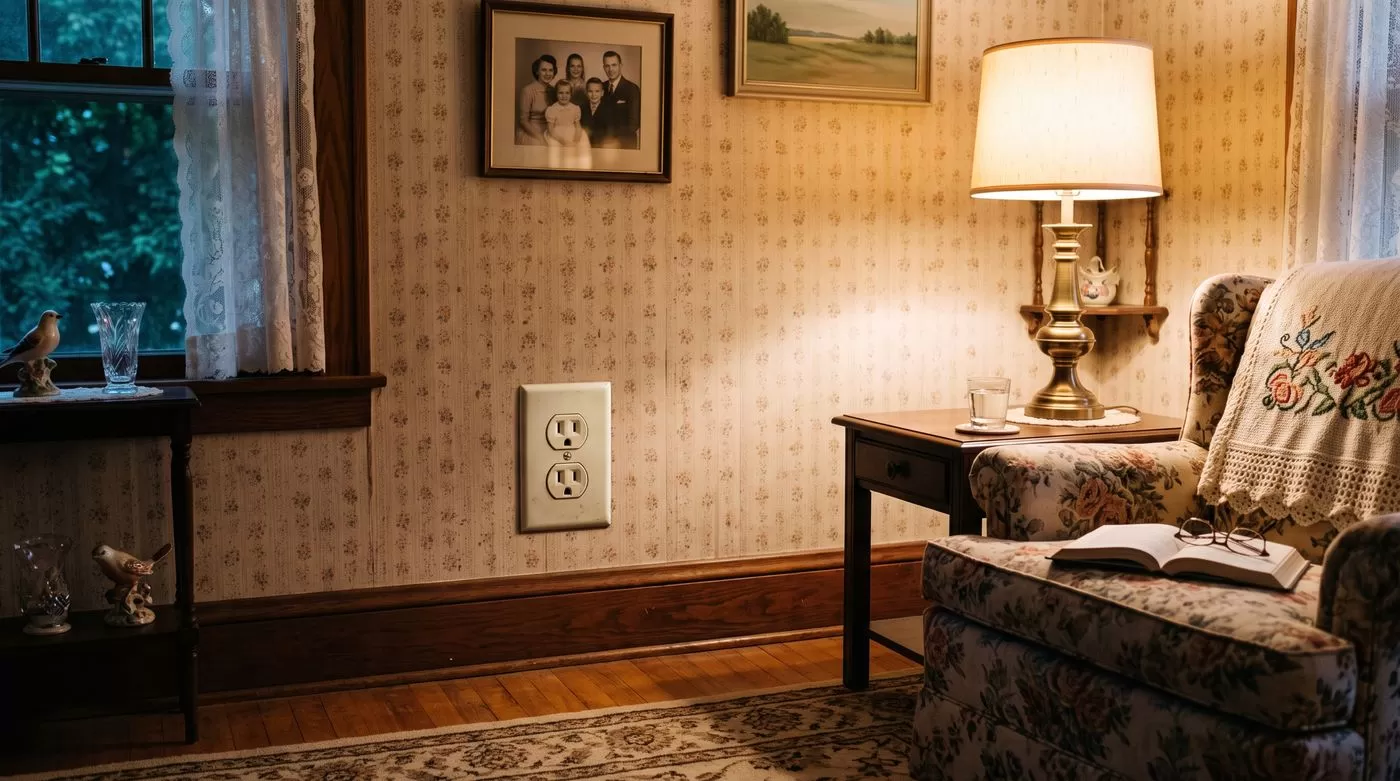
Homeowners in 1950s and older Twin Cities homes often notice the same thing: not enough outlets, and the ones that exist are in odd spots. That’s not a maintenance issue — it’s the electrical code the home was originally built to.
The standard was genuinely different
Mid-century electrical code required far fewer outlets per room than today’s standard, which calls for an outlet within six feet of any point along a wall. A 1950s living room might have had two outlets total; a modern one of the same size would have six or more.
What that meant for daily life then vs. now
A household in 1955 ran a lamp, a radio, maybe a television. A household today runs multiple devices per room simultaneously — chargers, streaming devices, lamps, a laptop — on wiring designed for a fraction of that load, routed through a scattering of extension cords when the outlets run out.
The fix isn’t just “add outlets”
Adding outlets to an old, undersized circuit without addressing the circuit itself just spreads the same overloaded capacity across more plugs. A proper fix usually means new circuits, not just new outlet boxes on old wiring.
Tired of hunting for an open outlet?
Three Rivers Electric brings older Twin Cities homes up to a modern outlet standard, room by room or all at once. QMerit-certified, licensed (EA761814), veteran-owned, 5.0★. Get a quote or call 651-418-1476.