Storm Season Power Outage Safety: A Twin Cities Holiday Weekend Checklist
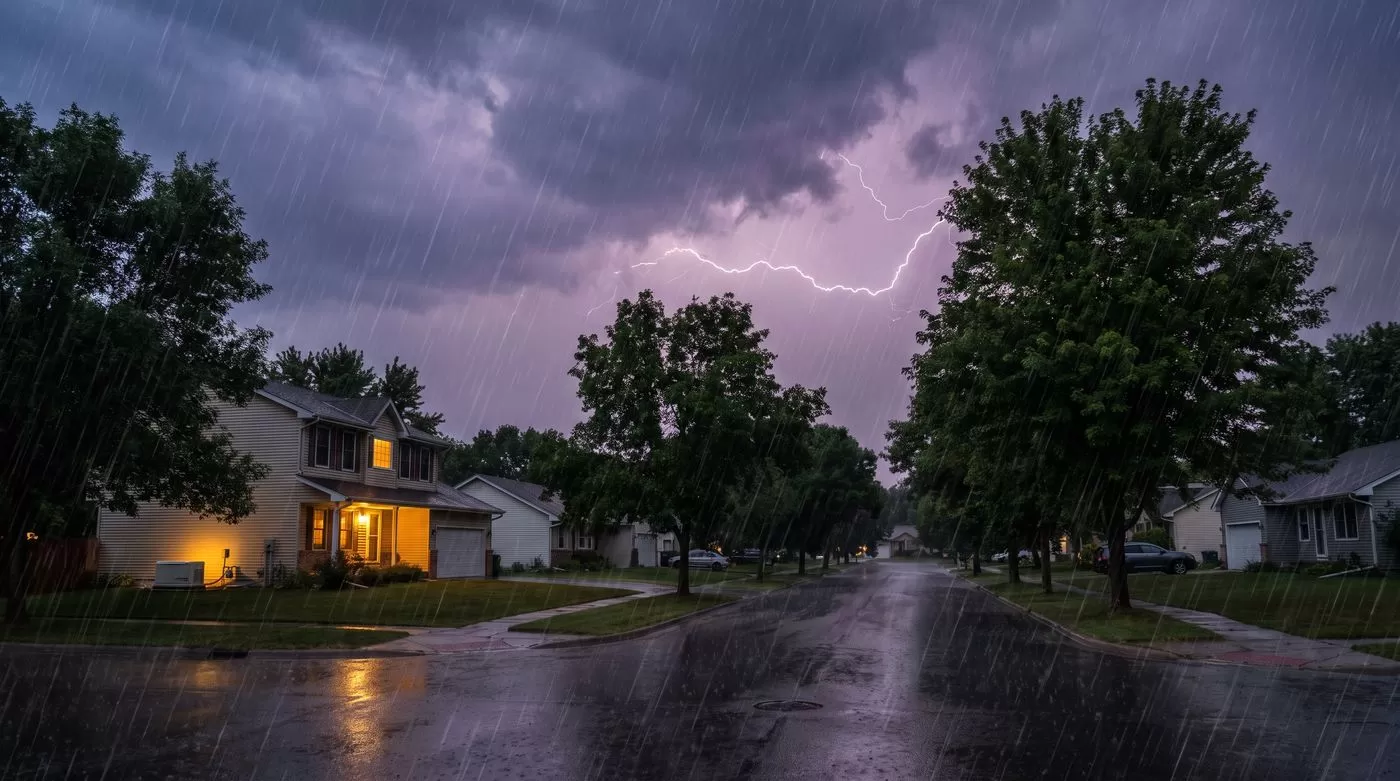
Storm-driven power outages are inevitable in Minnesota — 2024 had multiple metro-wide events that lasted 18+ hours. This year is shaping up similarly. Most homeowners handle the basics fine: flashlights, full freezer, board games. But there are a few specifics that matter for protecting your wiring, your appliances, and your family during and after the outage. Here’s the short list, written so you can use it before the next storm.
Before the Storm: Five Quick Things
(1) Locate your main service disconnect — usually the large breaker at the top of your panel labeled “MAIN.” Practice flipping it off and on. If utility crews are doing line work to restore your power, sometimes they advise turning off your main breaker so power restoration is controlled when it comes back.
(2) Surge protect what matters. Smart appliances, refrigerator electronics, HVAC control boards — these get fried by the surge that often happens when utility power comes back. A whole-house surge protector at the panel is the right long-term answer ($300-400 installed); plug-in surge strips for individual high-value devices are the short-term answer.
(3) Charge phones and battery banks. (4) Set the fridge to the coldest setting an hour before the storm hits, then leave the doors closed. A full freezer holds temperature ~48 hours, a half-full one ~24. (5) Know where your gas shutoff is in case downed lines force you to evacuate.
During the Outage: What to Unplug, What to Leave On
Unplug: sensitive electronics (TVs, computers, gaming consoles, smart appliances), microwave, anything with a clock or smart board. Leave on: fridge/freezer (modern ones aren’t damaged by the outage, but the inrush surge when power returns is what kills the control board — so unplug them too if you want extra protection, or have a whole-house SPD).
If you have a portable generator: never operate it indoors, in an attached garage, or within 20 feet of any window or door. Carbon monoxide poisoning kills more people during outages than the outage itself. Generators must run outdoors with the exhaust pointed away from the house. Use heavy-duty extension cords sized for the load. Do NOT back-feed your house panel through a dryer outlet — that’s called “suicide cording” and it can electrocute utility line workers who think the line is dead.
When the Outage Is Actually Your Wiring
Sometimes “the power’s out” is actually a tripped main breaker in your panel, not a utility problem. Check: does your neighbor’s house have power? Look at your panel — is the main breaker between ON and OFF (showing red or orange)? Try resetting it (flip fully OFF, wait 5 seconds, flip fully ON). If it trips again immediately, that’s an electrical fault — stop and call us.
Other electrical emergencies that come up during/after storms: burning smell at the panel (call immediately, do not turn anything on), visible damage to the service entrance where the lines come into the house from the pole (call Xcel first — they have to disconnect the line before we can work), water inside the panel (don’t touch, call us). Our emergency line is 651-418-1476 — answered 24/7 with a 2-hour response target inside our south metro service area.
Frequently Asked Questions
How long is food safe in the fridge during an outage?
Closed fridge: ~4 hours before the temperature reaches the danger zone (40°F+). Closed freezer: ~24-48 hours depending on how full. The FDA’s rule is “when in doubt, throw it out” for meat, dairy, and eggs that have been over 40°F for more than 2 hours.
Can I back-feed my house with a generator through a dryer outlet?
Absolutely not — it’s illegal in every state, can kill utility line workers, and will get your homeowner’s insurance canceled. The legal way is either an interlock kit on the panel (a manual transfer mechanism, ~$400-600 installed) or a transfer switch + generator inlet.
How do I know when it’s safe to plug things back in?
Wait 10-15 minutes after power comes back to let the utility verify the line is stable. Then plug in electronics one at a time. If your fridge or HVAC system doesn’t restart, that’s likely a tripped GFCI or a damaged control board — call us if cycling the breaker doesn’t fix it.
What should I do if there’s a downed power line in my yard?
Stay at least 35 feet away. Call Xcel Energy at 1-800-895-1999 immediately. Do not touch anything the line is touching (fences, vehicles, water). Wait for the utility to de-energize the line before approaching.
Should I have a standby generator installed before next storm season?
Worth a quote if you’ve had multiple long outages, work from home, or have medical equipment that requires power. Whole-home standby generators run $8,000-18,000 installed depending on size. We do free load calculations to size right.
Storm Prep Now, Not During the Outage
Pre-storm electrical prep — surge protector, panel check, generator transfer setup, EV charger weatherproofing. Call 651-418-1476 or book online. We answer the emergency line 24/7. Holiday weekend? Stay safe out there.