
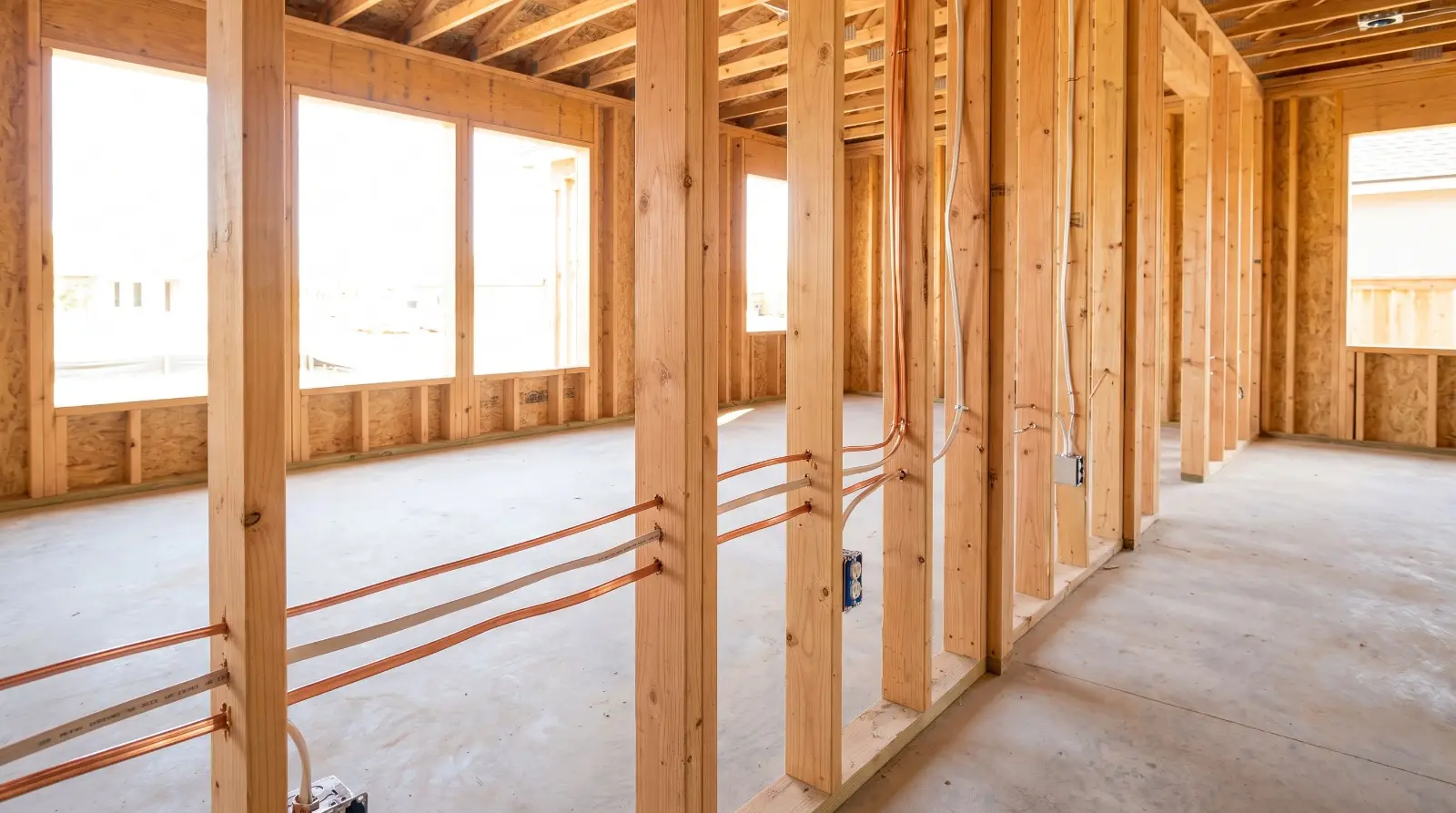
 Whole-Home Rewire · Older Twin Cities Homes
Knob & tube. Federal Pacific. Two-prong outlets — honestly assessed.
If your house was built before 1970 and you're worried about what's behind the walls, we’ll come look and tell you honestly what's safe, what isn't, and what (if anything) actually needs to be rewired. Permit-pulled, code-compliant, inspection-ready.
We'll tell you when you DON'T need a full rewire
Older Twin Cities homes get sold a lot of fear. Inspection reports flag knob-and-tube. Insurance underwriters surcharge. The internet shows you horror stories. The honest version is more nuanced — and we'd rather tell you the truth than the maximum-scope quote.
Knob-and-tube isn't automatic fear
Knob-and-tube wiring, installed correctly and not disturbed, is not automatically a fire hazard. Modern code permits it to remain in service in many cases when undamaged. The right answer depends on what's actually behind your walls — not what an upsell pitch says is there.
Three options on every quote
Minimum work to address actual safety issues, mid-tier work to bring high-priority circuits up to current code, full rewire only if it's genuinely warranted. You see all three side by side. You decide.
Permits + inspections + drywall coordinated
We pull the permit, meet the inspector, and coordinate with Three Rivers Contracting (our partner GC) for any drywall opening + patch. You manage one quote, one project, one schedule.
When a rewire IS the right answer
Five common triggers we see in Saint Paul, Stillwater, Hastings, and the older Saint Paul Park / South Saint Paul / West Saint Paul housing stock.
Active knob-and-tube + you're remodeling
The moment you open a wall, current code often requires bringing the affected circuits up to spec. If those circuits are knob-and-tube, the practical answer is to rewire while the wall is open — far cheaper than opening it twice.
Insurance won't renew without a rewire
Some MN carriers surcharge or non-renew on knob-and-tube and Federal Pacific panels. If you've gotten that letter, the rewire often pays for itself across 3–5 renewal cycles even before you account for safety.
Buying or selling — inspection lever
We do post-inspection rewire quotes regularly. A written, dated proposal valid 30 days is the document you put in front of the buyer or seller during the negotiation window.
1920s–1950s service is genuinely undersized
Original ungrounded branch circuits, undersized #14 wire feeding modern kitchen and laundry loads, fuse boxes still tied to a 60A or 100A service entrance, brittle cloth-jacketed wire behind boxes. Not hand-wave — actual risk.
Adding modern loads to a 1950s system
EV charger, heat pump, induction range. The old wiring isn't the only issue — the panel and the circuit count usually can't accommodate them. Selective rewiring of affected circuits paired with a panel upgrade is often the right scope.
Aluminum branch wiring (1965–1973)
Documented fire risk at outlet/switch terminations. Not always a full rewire, but at minimum a CO/ALR remediation pass on every device in the house. We'll quote either path.
What's included in a whole-home rewire
Here's what's in the quote — so you can compare line-for-line against any cheaper-looking competitor bid.
How a rewire actually goes
5 phases. Smaller homes (under 1,500 sq ft) with good basement and attic access run faster; finished-basement homes run longer because of wall-opening logistics.
Assessment
Licensed electrician walks the existing system with you, pulls a few accessible covers (panel, oldest outlet boxes, basement junctions), runs the load math, and writes the proposal during the visit.
Permit + planning
We pull the electrical permit, coordinate with Xcel if a service-entrance change is involved, and lock in the install schedule. Three Rivers Contracting joins for drywall planning.
Install
Rough-in, branch circuit pulls, panel work. For larger homes we recommend staying offsite for the heaviest 3–5 days where multiple rooms are in active work. Partial rewires you can usually stay through.
Inspection
City electrical inspector signs off on rough-in and final. We meet them.
Drywall + paint coordination + warranty docs
Three Rivers Contracting handles drywall patch and finish. You get the signed permit, inspection card, and our workmanship warranty.
What does a rewire cost?
| Whole-home rewire (Twin Cities) | Typical price* |
|---|---|
| Smaller / newer homes | $12,000–$20,000 |
| Larger or lath-and-plaster homes | $25,000–$45,000 |
| Panel / service upgrade (often bundled) | $7,700–$9,500 |
Honestly — the variation is huge
Square footage, wall finish (lath-and-plaster makes everything harder), basement and attic access, fixture and circuit count, and whether a panel upgrade is bundled all change the number. Two houses with "the same job" can vary 50%+. Most full rewires in the Twin Cities range $12,000–$45,000 depending on those variables.
What we can tell you up front:
- In-home quote with written proposal valid 30 days
- Three options — minimum / mid-tier / full rewire side by side
- The price we quote is the price you pay — if scope changes mid-project, we tell you the cost before we touch it
- Partial rewires are real options for many homes — not every old house needs a full $25,000 scope
- Drywall + paint coordination is line-itemed, not buried
Whole-home rewire FAQ
Do I really need to rewire the whole house?
Will I have to move out?
How much does a whole-home rewire cost in the Twin Cities?
Will my insurance company surcharge me if I have knob-and-tube?
Do you do drywall patching too?
What about asbestos or lead paint?
What's the difference between knob-and-tube, aluminum, and Federal Pacific?
Do you serve my city?
In-home rewire assessment
We'll pull a few covers, run the math, and tell you honestly whether you need a full rewire, a partial scope, or none at all. Written quote during the visit, valid 30 days.