 Electrical Safety Inspection
We'll tell you when your panel is fine
Worried about a flicker, a Federal Pacific label, or a smell that won't go away? We’ll come look — flat $195, no trip charge — and tell you honestly what's safe, what isn't, and what (if anything) actually needs to be fixed. No upsell pressure. No fear-sell.
We will tell you when your panel is fine
Most “safety inspections” in the Twin Cities are sales calls in disguise. The technician arrives, finds something to be worried about, and leaves you a four-figure quote. The fear is the product. We do this differently.
No fear-sell, no commission pressure
Our techs aren't paid on commission. We'd rather be the people you call back next year than the people who oversold you today. If your panel is fine, we say so and head out.
Written report at the end of the visit
One page. Findings + photos if useful + a quote line for any recommended work. If nothing needs fixing, the report says "no work recommended at this time" and there's no quote to manage.
The price we quote is the price you pay
If we do recommend work, you get a written quote during the visit, valid 30 days. No add-ons. No follow-up phone tag.
What we check
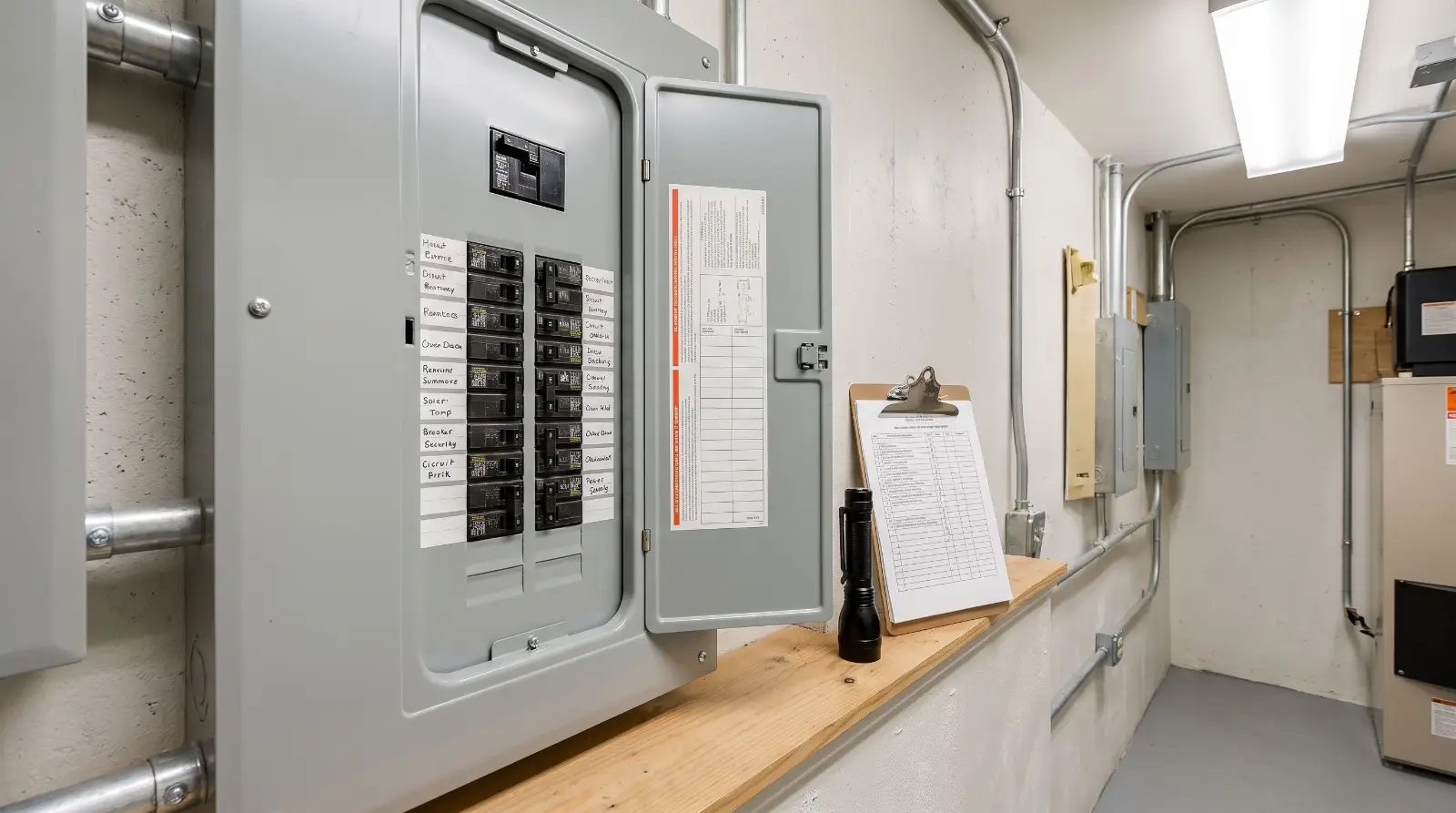
A safety inspection is a 30–60 minute visit. We pull the panel cover, walk through the house, and (for fire-safety checks) pull a few outlet and junction box covers. Specifically:
Panel manufacturer & model
Federal Pacific Stab-Lok, Zinsco, Sylvania, Challenger — documented failure modes flagged by the NEC and insurance industry. We identify what you have and what to do about it.
Capacity vs your loads
Main breaker rating, panel fullness, and a quick load calc against your major appliances. An undersized 100A or 150A panel is fine until you add an EV or heat pump.
Visible panel condition
Scorch marks, double-tapped breakers, corrosion, water damage, evidence of overheating, mis-sized branch wires, missing AFCI / GFCI where code requires.
Bonding & grounding
Grounding electrode connection and bonding jumpers. Improper grounding is one of the most common findings in older homes — and a real safety issue.
Outlets, switches, junction boxes
(Fire-safety check.) Pulled covers on a sample of older receptacles and ceiling boxes. Looking for scorch marks, melted plug forks, aluminum branch wiring, hidden splices, undersized boxes.
Smoke & CO detector compliance
Minnesota's detector requirements have evolved. We check what's installed against current code and tell you if you're missing required interconnected smoke alarms or CO detectors near sleeping areas.
When to call us
You don't need a reason — the inspection is a flat $195. But here are the most common ones.
How a safety check goes
Five steps, no pressure, no follow-up phone tag.
You call or fill out the form
We schedule, usually within the same business week.
We arrive in the window
We confirm by text the morning of so you don't burn PTO on a no-show.
30–60 minute visit
We pull the panel cover, walk through the house, and pull a few accessible outlet/box covers if it's a fire-safety check. We talk through what we see in plain English.
Written report at the end
One page. Findings, photos if useful, and a quote line for any recommended work. "No work recommended" is also a real outcome — and the most common one when the panel is in good shape.
You decide
No pressure. No follow-up phone tag. The quote (if any) is valid 30 days.
Safety inspection FAQ
What does the inspection cost?
What if you find something serious?
Will you try to sell me a panel upgrade?
Do I need to do a safety inspection if my panel is newer?
How long is the report good for?
Do you do safety inspections during repair calls?
What about Federal Pacific or Zinsco panels specifically?
Do you serve my city?
Book an electrical safety inspection
30–60 minutes, written report at the end, no pressure to do work. Worth knowing whether your panel is fine.